
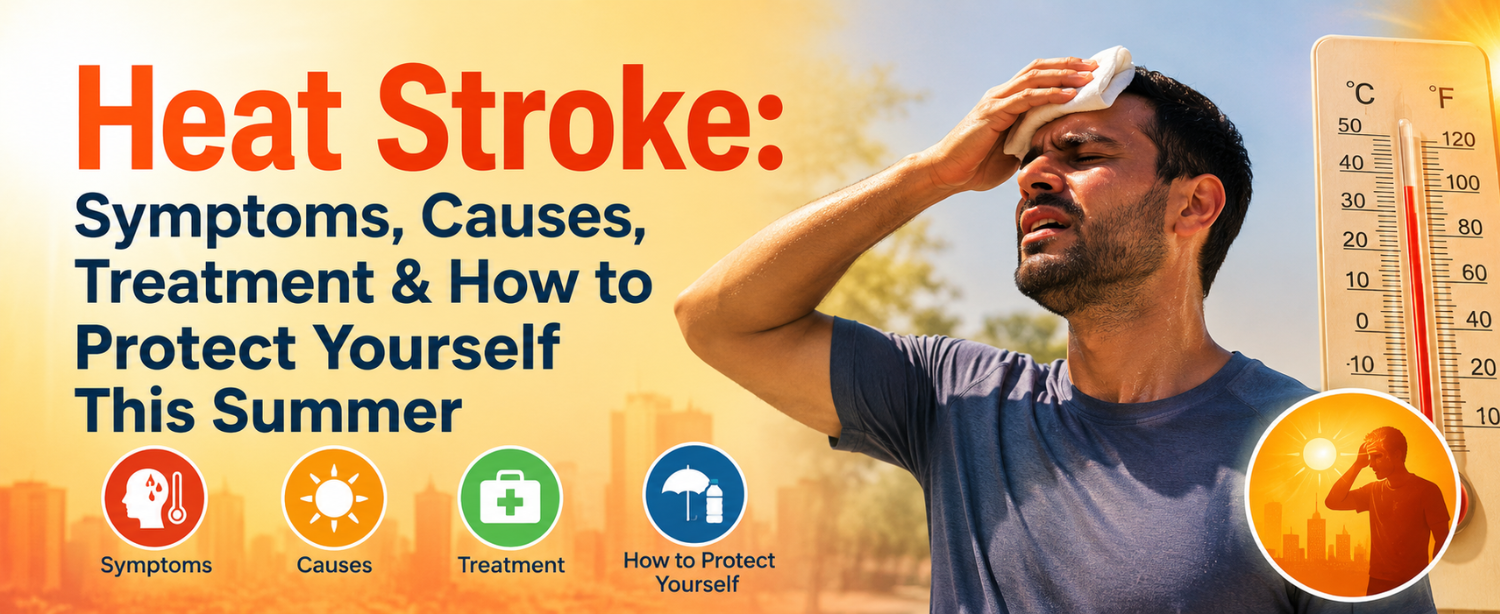
Every summer in India, thousands of people are hospitalised, and hundreds lose their lives due to heat stroke. It is not simply a matter of feeling too hot. Heat stroke is a medical emergency in which the body’s temperature regulation system fails completely, causing core body temperature to rise to dangerous levels that can damage the brain, heart, kidneys, and muscles within minutes.
Understanding what heat stroke is, recognising its warning signs, and knowing the appropriate actions to take and avoid can be the difference between full recovery and serious, permanent harm.
What Is Heat Stroke?
What is heat stroke in precise medical terms? It is the most severe form of heat-related illness. It occurs when the body’s core temperature rises above 40°C (104°F) and the body’s normal cooling mechanisms, primarily sweating, fail to compensate. As a result, the heat begins to damage tissues and organs directly, particularly the brain.
In contrast to milder heat‐related conditions such as heat cramps or heat exhaustion, heat stroke is characterised by central nervous system dysfunction, including confusion, disorientation, seizures, or loss of consciousness. It does not resolve with rest and oral fluids alone and requires immediate emergency medical intervention
Without prompt cooling and hospital treatment, heat stroke can lead to multi-organ failure and death.
Types of Heat Stroke
There are two recognised types of heat stroke, each with a distinct mechanism:
1. Classic (Non-Exertional) Heat Stroke This type occurs when a person is exposed to a hot environment for a prolonged period without adequate cooling, during a heatwave. It is most common in the elderly, very young children, people with chronic illness, and those without access to air conditioning. The body simply cannot dissipate the environmental heat fast enough.
2. Exertional Heat Stroke This type occurs in otherwise healthy, active individuals including athletes, military personnel, outdoor workers, and labourers, who engage in intense physical activity under hot and humid conditions. The body generates more heat internally than it can release. It can develop rapidly, even in people who are well-hydrated.
Both types are medical emergencies requiring the same urgent response.
Signs & Symptoms of Heat Stroke
The signs and symptoms of heat stroke develop rapidly and can escalate within minutes. Recognising them early is critical. Key symptoms include:
Central nervous system changes – the defining feature:
- Confusion, disorientation, or altered behaviour
- Slurred speech
- Agitation or unusual irritability
- Seizures
- Loss of consciousness or unresponsiveness
Physical signs:
- Core body temperature above 40°C (104°F)
- Hot, flushed skin, which may be dry (classic heat stroke) or moist (exertional heat stroke)
- Rapid, strong pulse
- Throbbing headache
- Nausea and vomiting
- Dizziness or feeling faint
- Muscle weakness or cramps
- Rapid, shallow breathing
The critical distinction: In heat exhaustion, the person is still sweating, alert, and able to communicate. In heat stroke, mental status changes are present, including confusion, incoherence, or unresponsiveness. This is the line that separates a serious but manageable condition from a life-threatening emergency.
What Causes Heat Stroke?
The heat stroke causes all share a common mechanism: the body is generating or absorbing more heat than it can release.
- Prolonged exposure to a hot environment: Heatwaves, poorly ventilated indoor spaces, or confined spaces such as parked cars — where temperatures can rise to lethal levels within minutes
- Strenuous physical activity in heat: Outdoor labour, distance running, military training, or any intense exertion during peak heat hours
- Dehydration: Reduces the body’s ability to sweat and therefore cool itself effectively
- High humidity: Sweat cannot evaporate efficiently in humid air — the primary cooling mechanism is impaired
- Alcohol consumption: Alcohol disrupts the body’s heat regulation and accelerates dehydration
- Wearing heavy or dark clothing: Traps body heat and prevents the skin’s surface from cooling
- Certain medications: Diuretics, antihistamines, beta-blockers, antipsychotics, and stimulants can impair heat tolerance or increase heat production
In India, heat stroke causes during peak summer months (April–June) are overwhelmingly related to outdoor exposure during afternoon hours, occupational heat exposure in construction and agriculture, and lack of access to shade or hydration.
Who Is Most at Risk?
While heat stroke can affect anyone, certain groups are disproportionately vulnerable:
- Elderly individuals: Reduced ability to sweat, lower thirst sensation, and more frequent chronic illness and medication use
- Infants and young children: Immature thermoregulatory systems and complete dependence on caregivers for hydration and cooling
- Outdoor and manual workers: Farmers, construction workers, and delivery personnel with prolonged sun exposure and physical exertion
- Athletes and military personnel: High-intensity exertion in hot conditions
- People with chronic conditions: Heart disease, diabetes, kidney disease, and obesity all impair heat tolerance
- People taking certain medications: As listed above
- Those without access to cooling: People in homes without fans or air conditioning during heatwaves are at significant risk, particularly in urban heat islands
Heat Stroke First Aid: What to Do Immediately
If you suspect someone is experiencing heat stroke, every minute matters. The priority is to cool the person as rapidly as possible while calling for emergency help.
Step-by-step first aid:
- Call emergency services immediately: heat stroke requires hospital treatment. Do not delay this call while attempting first aid.
- Move the person out of the heat: into shade, an air-conditioned space, or any cooler environment without delay.
- Begin cooling immediately:
- Apply cold wet cloths or ice packs to the neck, armpits, groin, and forehead — areas with major blood vessels close to the skin
- If available, immerse the person in cool (not ice-cold) water or use a cool mist spray with fanning
- Remove excess clothing to expose skin to air
- Do NOT give fluids by mouth if the person is confused, unresponsive, or showing signs of neurological change — they may inhale the liquid
- Do NOT give aspirin or paracetamol: these are ineffective for heat stroke and will not reduce core body temperature in this context
- Position correctly: if unconscious but breathing, place in the recovery position; if not breathing, begin CPR if trained
- Continue cooling until emergency services arrive: the goal is to bring body temperature below 39°C as quickly as possible
Time to cooling is the single most important determinant of outcome in heat stroke. Rapid cooling within the first 30–60 minutes dramatically improves survival and reduces organ damage.
How Is Heat Stroke Diagnosed?
On arrival at the hospital, the medical team will assess and confirm heat stroke through:
- Core body temperature measurement: Rectal temperature is the most accurate in emergency settings; readings above 40°C confirm hyperthermia
- Neurological assessment: Evaluation of consciousness, orientation, and any focal neurological signs
- Blood tests: Full blood count, electrolytes, kidney and liver function, blood glucose, coagulation profile, to assess for organ involvement and metabolic derangement
- Cardiac monitoring: ECG to assess rhythm, as heat stroke can cause arrhythmias
- Urine analysis: dark or absent urine indicates dehydration and possible kidney injury
- Imaging: CT brain scan if there is concern about an alternative neurological cause of altered consciousness
Heat Stroke Treatment in Hospital
Hospital heat stroke treatment is intensive and aimed at rapidly restoring normal body temperature, supporting organ function, and preventing complications.
Active cooling measures used in hospital:
- Ice water immersion or cooling blankets
- Cold intravenous fluids
- Evaporative cooling with fans
- Cold water lavage in severe cases
Supportive treatment:
- Intravenous fluid resuscitation to correct dehydration and support blood pressure
- Electrolyte replacement with sodium, potassium, and magnesium correction
- Oxygen supplementation and ventilatory support if required
- Monitoring for and management of complications, including rhabdomyolysis (muscle breakdown), acute kidney injury, liver damage, disseminated intravascular coagulation (DIC), and seizures
Patients with severe heat stroke are admitted to our critical care unit for continuous monitoring. If you or a family member develops heat stroke symptoms, proceed directly to our accident and emergency department without delay.
For patients with underlying chronic conditions that increase the risk of heat stroke, our internal medicine specialist team can assist with ongoing risk assessment and preventive planning.
How to Prevent Heat Stroke This Summer
How to avoid heat stroke is straightforward, but requires consistent, proactive action during hot weather:
- Stay hydrated throughout the day: drink water regularly, even if you do not feel thirsty. In extreme heat, 2–3 litres or more may be required. Avoid sugary drinks and alcohol.
- Avoid going outdoors during peak heat hours: between 11 AM and 4 PM during summer. If you must go out, wear light-coloured, loose-fitting, breathable clothing and a hat.
- Seek shade and ventilation: if working or exercising outdoors, take regular breaks in shade. Never sit in a parked car in summer heat, even briefly.
- Use fans, coolers, or air conditioning: particularly during heatwaves. Check on elderly relatives and neighbours who may not have adequate cooling at home.
- Never leave children or pets in parked vehicles: temperatures inside a stationary car can become lethal within minutes.
- Modify exercise timing: exercise outdoors only in the early morning or evening during summer. Reduce intensity in high humidity.
- Know your medications: if you take diuretics, antihistamines, antipsychotics, or other heat-sensitive medications, discuss heat risk with your doctor before summer.
- Wear appropriate protective equipment: outdoor workers should use shade structures, schedule breaks, and have access to clean drinking water throughout the working day.
- Watch for early warning signs: heavy sweating, dizziness, headache, and excessive thirst are signals to stop, rest, and rehydrate before conditions worsen.
- Check on vulnerable individuals during heatwaves: the elderly, children, and those with chronic illness need particular attention and proactive support during extreme weather.
Conclusion
Heat stroke is both preventable and highly treatable when recognised and addressed without delay. Given India’s increasingly severe summers, widespread outdoor work, and limited public awareness, it remains a critical seasonal health concern.
The heat stroke symptoms to remember are: very high body temperature, hot skin, and confusion or altered consciousness. These three together constitute a medical emergency. Do not wait. Cool the person and call for emergency help immediately.
Prevention through hydration, shade, timing, and awareness is the most powerful tool available, especially for those most vulnerable to the heat.
Individuals experiencing symptoms of heat stroke or other heat-related illness should present to Kokilaben Dhirubhai Ambani Hospital without delay for urgent evaluation and treatment.
Frequently Asked Questions
Q1: What is the difference between heat stroke and heat exhaustion?
Heat exhaustion is a precursor condition in which a person sweats, feels weak and dizzy, but remains alert. Heat stroke is a medical emergency: body temperature is dangerously high, and mental confusion or loss of consciousness is present. Heat exhaustion can progress to heat stroke if not treated promptly.
Q2: What body temperature is considered dangerous in heat stroke?
A core body temperature above 40°C (104°F) combined with neurological symptoms, including confusion, seizures, or loss of consciousness, defines heat stroke. Temperatures above 41°C carry a significantly increased risk of permanent organ damage and death.
Q3: What are the first signs that someone may be having a heat stroke?
Sudden confusion, stopping sweating despite extreme heat, a throbbing headache, nausea, and hot flushed skin. Any change in mental status in a hot environment should be treated as heat stroke until proven otherwise.
Q4: Can heat stroke happen indoors or only in direct sunlight?
Yes, it can happen indoors. Classic heat stroke commonly occurs in poorly ventilated homes during heatwaves, particularly in elderly people without access to fans or air conditioning.
Q5: What should you do immediately if someone collapses due to heat stroke?
Call emergency services immediately. Move the person to a cool place, remove excess clothing, and apply cold wet cloths to the neck, armpits, and groin. Do not give fluids by mouth if unconscious. Continue cooling until medical help arrives.
