
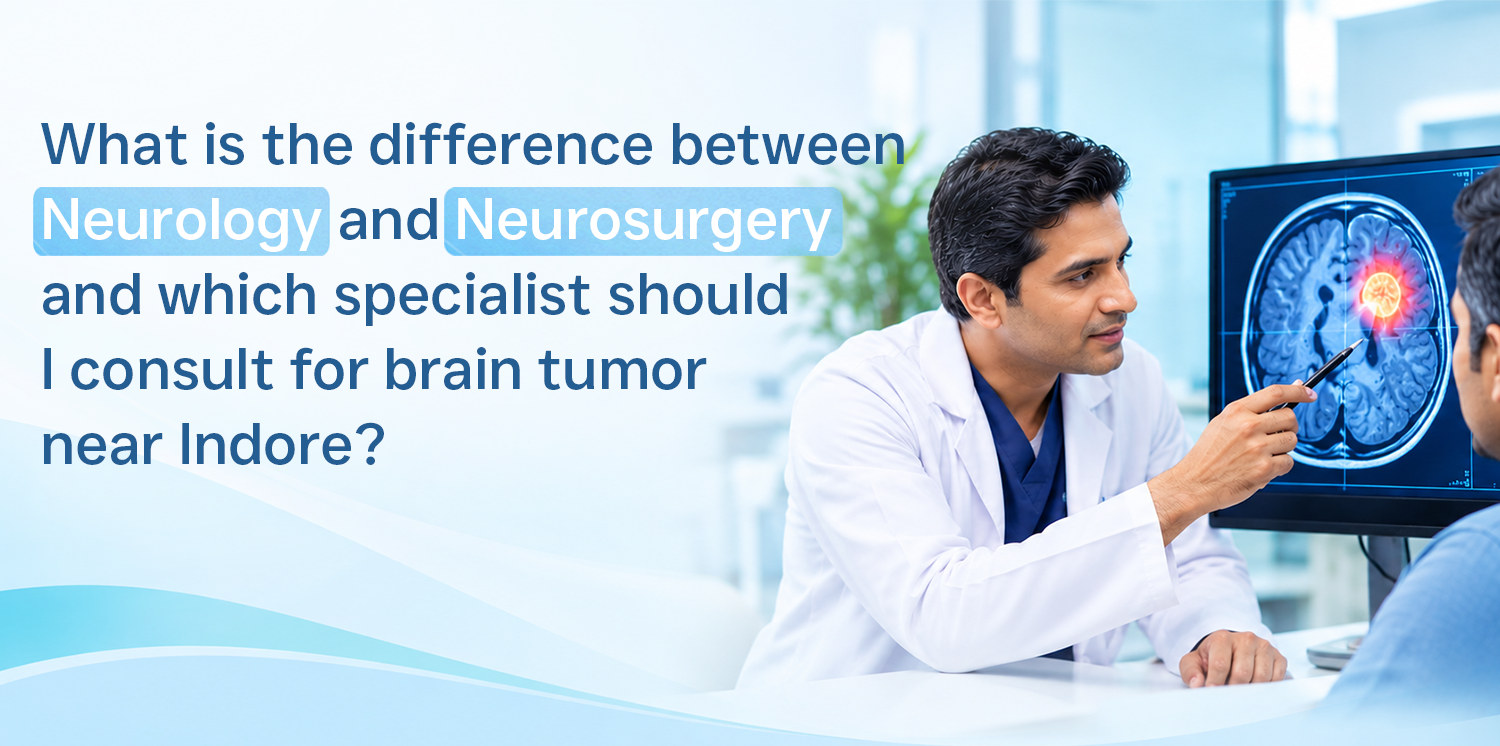
A brain tumor diagnosis often raises an important question: which specialist should a patient consult first? Both neurologists and neurosurgeons play important roles in diagnosing and treating brain tumors, but their responsibilities are different.
A neurologist examines how the brain, spinal cord, and nerves function and manages symptoms with medication. A neurosurgeon performs operations when a tumor needs to be removed or a tissue sample needs to be collected for testing.
Understanding the difference between these specialists can help patients choose the right doctor and avoid unnecessary delays. This guide explains what neurologists and neurosurgeons do, how brain tumors are diagnosed, and how to choose a specialist in Indore.
What Is Neurology?
Neurology is the branch of medicine that deals with the brain, spinal cord, and nerves. A neurologist examines how these parts of the nervous system function, identifies medical conditions, and provides treatment without surgery.
Neurological treatment may include medication, therapy, lifestyle advice, and regular monitoring. Neurologists commonly manage conditions such as epilepsy, migraines, strokes, Parkinson’s disease, and nerve disorders.
When a brain tumor is suspected, a neurologist may be the first specialist to examine the patient. Symptoms such as persistent headaches, seizures, vision changes, memory problems, or weakness on one side of the body may require further investigation.
The neurologist may perform a neurological examination, recommend brain scans, and prescribe medication to manage symptoms such as seizures. If the scans reveal a tumor, the patient may be referred to a neurosurgeon for further evaluation. The neurologist can also remain involved in managing symptoms during treatment.
What Is Neurosurgery?
Neurosurgery is the medical specialty that focuses on surgical treatment of conditions affecting the brain, spine, and nerves. A neurosurgeon performs operations when a condition requires surgical intervention.
Neurosurgical procedures for brain tumors may include:
- Removing as much of the tumor as can be safely removed.
- Taking a tissue sample for laboratory testing.
- Draining accumulated fluid when required.
- Treating complications that cause pressure or bleeding in the brain.
Modern neurosurgery uses advanced imaging, surgical microscopes, and computer-guided navigation to help surgeons operate accurately while protecting surrounding healthy tissue.
Not every patient with a brain tumor needs immediate surgery. The neurosurgeon reviews the patient’s scans, medical history, and overall health before recommending surgery, radiation therapy, or regular monitoring.
The neurosurgery in Indore department combines specialist care with modern operating theatres and intensive care facilities.
Neurology vs Neurosurgery for Brain Tumors
Both specialists contribute to brain tumor care, but they focus on different aspects of diagnosis and treatment.
Neurologist:
- Examines symptoms and nervous system function.
- Recommends diagnostic tests and brain scans.
- Manages headaches, seizures, and other symptoms with medication.
- Monitors neurological health during treatment.
Neurosurgeon:
- Reviews brain scans and evaluates the tumor.
- Performs a biopsy or surgery when required.
- Determines whether the tumor can be safely removed.
- Helps plan surgical treatment and recovery.
If a patient has symptoms but no confirmed diagnosis, a neurologist may be the right specialist to consult first. If a scan has already revealed a brain tumor, a neurosurgeon can assess the need for surgical treatment.
In many cases, both specialists work together. Oncologists may also become involved when radiation therapy or chemotherapy is required.
How Are Brain Tumors Diagnosed?
Diagnosing a brain tumor involves several steps. A brain MRI and imaging help doctors examine the size, location, and characteristics of a suspected tumor.
Common diagnostic tests include:
1. Neurological Examination
The doctor checks vision, hearing, balance, muscle strength, reflexes, and memory to assess how well the nervous system is functioning.
2. CT Scan
A CT scan produces detailed images of the brain and is particularly useful in emergency situations.
3. MRI Scan
An MRI provides detailed images of the tumor, including its size, shape, and location. Contrast dye may be used to make certain areas more visible.
4. Biopsy
A surgeon collects a small tissue sample, which a pathologist examines to identify the tumor type and its characteristics.
Depending on the patient’s condition, doctors may also recommend PET scans or specialised MRI examinations to help plan treatment.
How Is Brain Tumor Treatment Planned?
After examining the tumor’s type, size, location, and grade, doctors prepare a treatment plan. The patient’s age, overall health, and symptoms are also considered.
Treatment options may include:
- Surgery: Removes as much of the tumor as can be safely removed.
- Radiation therapy: Uses focused radiation to destroy tumor cells or control remaining tumor tissue.
- Chemotherapy: Uses medicines to slow down or stop the growth of tumor cells.
- Targeted therapy: Targets specific features of tumor cells.
- Medication: Helps manage symptoms such as seizures, swelling, and pain.
- Regular monitoring: May be recommended for certain slow-growing tumors that are not causing symptoms.
Some patients may require a combination of treatments. Rehabilitation, including physiotherapy and speech therapy, may also help patients regain strength and everyday skills after treatment.
How to Choose a Brain Tumor Specialist in Indore
Choosing the right specialist and hospital is an important part of treatment. Patients can consider the following factors:
- Qualifications: Check the specialist’s relevant postgraduate qualifications in neurology or neurosurgery and medical registration.
- Experience: Ask about the doctor’s experience in diagnosing or treating brain tumors.
- Hospital facilities: Look for access to MRI and CT scans, neurosurgical operating theatres, intensive care, and radiation services.
- Team approach: A specialist should be able to coordinate with oncologists, radiologists, and rehabilitation professionals.
- Clear communication: Choose a doctor who explains the diagnosis and treatment options in simple language.
- Second opinion: Patients should feel comfortable seeking another medical opinion before making important treatment decisions.
- Access and cost: Consider the hospital’s location, expected follow-up visits, treatment costs, and insurance coverage.
Conclusion
Neurologists and neurosurgeons play different but equally important roles in brain tumor care. Neurologists evaluate symptoms, manage neurological conditions, and arrange diagnostic tests. Neurosurgeons assess tumors and perform surgery when required.
The right specialist depends on the patient’s symptoms, scan results, and treatment needs. Consulting a qualified specialist early can help patients understand their diagnosis and discuss suitable treatment options.
FAQs
Can a neurologist diagnose a brain tumor?
A neurologist can identify symptoms that may suggest a brain tumor and recommend MRI or CT scans. A biopsy may be required to determine the exact tumor type. The neurologist may refer the patient to a neurosurgeon for further evaluation.
Does every brain tumor require surgery?
No. Some slow-growing tumors that do not cause symptoms may be monitored through regular scans. Depending on the tumor type and the patient’s condition, doctors may recommend radiation therapy, chemotherapy, medication, or surgery.
Can a brain tumor be found during a routine scan?
Yes. A brain tumor may sometimes be discovered unexpectedly during a scan performed for a headache, injury, or another medical concern. An unusual scan result should be reviewed by a qualified specialist.
How is a brain tumor’s type determined?
Imaging scans help doctors understand the tumor’s size and location. A biopsy may be needed to identify its exact type and characteristics. In some cases, additional laboratory or genetic tests help doctors plan treatment.