
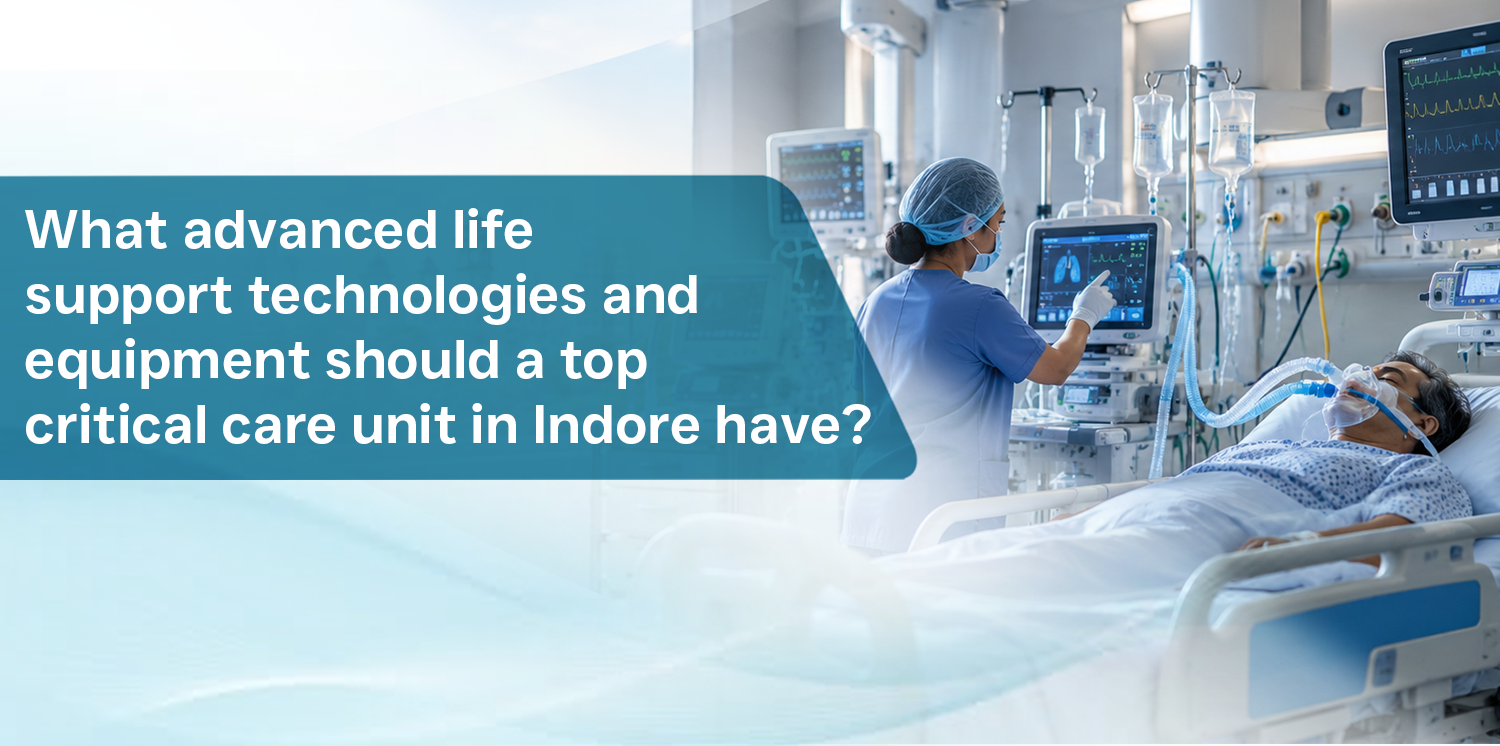
When someone close to you is admitted to an intensive care unit, every piece of equipment in the room plays an important role in their treatment. A critical care unit provides continuous monitoring and medical support to patients with serious or life-threatening conditions. Advanced life support systems help doctors respond quickly to changes in a patient’s condition.
However, many families are unfamiliar with the equipment and technology used in an ICU. Understanding these facilities can help them make informed decisions when choosing a hospital.
This guide explains the purpose of a critical care unit, the life support systems and monitoring equipment used in intensive care, and how technology supports medical teams. It also highlights important factors to consider when choosing a critical care hospital in Indore.
What Is a Critical Care Unit?
A critical care unit, commonly known as an intensive care unit (ICU), provides specialised treatment to patients with serious medical conditions who require continuous monitoring and support for one or more organs.
Patients may be admitted following severe infections, major surgery, heart attacks, strokes, serious accidents, or respiratory failure.
Unlike a general hospital ward, an ICU has specialised equipment, trained nurses, and doctors experienced in managing critically ill patients. Depending on the patient’s condition, nursing staff may be assigned to one or two patients to provide closer monitoring.
The main objectives of a critical care unit are to support affected organs, treat the underlying medical condition, manage sudden changes in health, and give the body time to recover.
A well-equipped ICU should have sufficient space around each bed, easy access to medical equipment, appropriate infection-control measures, and reliable power and oxygen supplies.
Patients may remain in the unit for several days or weeks, depending on their condition. Once their health becomes stable, they may be transferred to a general ward.
Effective critical care in Indore depends on trained medical professionals, suitable infrastructure, and advanced life support technology.
What Advanced Life Support Systems Are Used in Critical Care?
Advanced life support systems help doctors manage patients who cannot maintain essential body functions without medical assistance.
Some of the important equipment used in a critical care unit includes:
- Ventilators: These machines support patients who cannot breathe adequately on their own. Modern ventilators allow medical teams to adjust breathing support according to the patient’s condition.
- High-flow oxygen and non-invasive ventilation: These systems provide breathing support through nasal devices or masks without requiring a breathing tube in selected patients.
- Dialysis machines: When the kidneys are unable to remove waste products and excess fluid effectively, dialysis machines help perform this function. Continuous dialysis may be used for critically ill patients who require gradual fluid and waste removal.
- ECMO (Extracorporeal Membrane Oxygenation): This advanced life support system temporarily supports heart and lung function by circulating blood outside the body, adding oxygen, and removing carbon dioxide. It is used in selected patients with severe heart or lung failure.
- Infusion and syringe pumps: These devices deliver medicines and fluids in carefully controlled amounts and at prescribed rates.
- Defibrillators and pacemakers: Defibrillators deliver an electrical shock to treat certain dangerous heart rhythms, while pacemakers help regulate an abnormally slow heartbeat.
- Intra-aortic balloon pump: This device provides temporary mechanical support to the heart in selected patients with severe cardiac conditions.
- Portable ventilators and monitors: These devices help maintain breathing support and monitor vital signs when critically ill patients need to be moved for procedures such as CT or MRI scans.
ICUs also require backup power systems and reliable oxygen supplies to ensure that essential life support equipment continues functioning during emergencies.
What Monitoring Equipment Should an ICU Have?
Continuous monitoring helps doctors and nurses identify changes in a patient’s condition and respond when necessary.
Important ICU monitoring equipment includes:
- Bedside monitors: These screens continuously display important measurements such as heart rate, heart rhythm, blood pressure, oxygen saturation, breathing rate, and temperature.
- Central monitoring station: This system allows nurses to monitor multiple patients from a central location and identify changes in their vital signs.
- Invasive pressure monitoring: A specialised catheter may be placed in an artery to measure blood pressure continuously, particularly in critically ill patients.
- Capnography: This equipment measures carbon dioxide levels in exhaled breath and helps assess breathing and ventilation.
- Blood gas analyser: This device measures blood oxygen, carbon dioxide, and acid-base balance, helping doctors assess respiratory and metabolic conditions.
- Bedside imaging: Portable ultrasound and X-ray equipment allow doctors to examine patients without moving them to another department.
ICU alarms are also important because they alert medical staff when monitored measurements move outside the prescribed limits. Proper alarm settings help staff identify important changes and respond appropriately.
How Does Technology Support Critical Care Teams?
Technology does not replace doctors and nurses. Instead, it helps them monitor patients, manage treatment, and respond more efficiently.
Some hospitals use electronic health records to keep medical reports, test results, medication details, and treatment notes in one place. This helps different specialists access relevant patient information.
Smart infusion pumps help deliver medicines at controlled rates and may provide alerts when settings need attention. Monitoring systems can also notify medical staff when a patient’s vital signs change.
Portable diagnostic equipment reduces the need to move unstable patients for certain examinations. Some hospitals also use tele-ICU systems, which allow remote intensive care specialists to review patient information and support the bedside medical team.
Air filtration, sterilisation equipment, and infection-control systems also help maintain a safer ICU environment.
Together, these technologies support better monitoring, treatment coordination, and patient safety.
What Should You Consider When Choosing a Critical Care Hospital in Indore?
Advanced equipment is important, but choosing a critical care hospital requires looking beyond the number of machines available.
Consider the following factors:
- Availability of specialists: Check whether qualified intensive care specialists, known as intensivists, are available to manage critically ill patients around the clock.
- Nurse-to-patient ratio: Ask about nurse staffing and whether the unit provides sufficient supervision based on the patient’s medical needs.
- Types of ICUs: Depending on the patient’s condition, look for specialised cardiac, neurological, paediatric, or neonatal intensive care facilities.
- Access to other departments: The ICU should have access to the operating theatre, blood bank, imaging department, and emergency care in Indore to support timely treatment.
- Infection control: Ask about isolation facilities, cleaning procedures, and hygiene protocols.
- Accreditation: Check whether the hospital has NABH accreditation and follows recognised patient safety standards.
- Communication: Choose a hospital where doctors explain the patient’s condition, treatment plan, and progress clearly to family members.
- Cost and insurance: Request a written estimate of expected expenses and confirm which health insurance plans are accepted.
If possible, visit the hospital and observe how the staff communicate with patients and their families.
Role of a Multidisciplinary Critical Care Team
A critical care unit is managed by a team of medical professionals who work together to provide comprehensive treatment.
The intensivist leads the medical team and makes important treatment decisions. Depending on the patient’s condition, specialists such as cardiologists, neurologists, and surgeons may also participate in treatment.
Other team members have specific responsibilities:
- Nurses: Monitor vital signs, administer medicines, and provide direct patient care.
- Respiratory therapists: Help manage ventilators and provide respiratory treatments.
- Clinical pharmacists: Review medicines, check dosages, and help identify possible medication-related problems.
- Physiotherapists: Assist with appropriate movement and rehabilitation when the patient’s condition allows.
- Dietitians: Plan nutritional support according to the patient’s medical needs.
- Counsellors: Provide emotional support to patients and family members when needed.
The team regularly reviews each patient’s condition, discusses treatment progress, and makes changes to the care plan when required.
Clear communication with family members is equally important. Doctors and nurses should explain the patient’s condition, treatment options, and progress in simple language. This helps families understand the care process and participate in important decisions.
Conclusion
Advanced life support technologies and monitoring equipment play an important role in modern critical care units. Ventilators, dialysis machines, infusion pumps, bedside monitors, and other specialised systems help medical teams support vital organ functions and manage serious medical conditions.
However, equipment alone does not determine the quality of critical care. Experienced intensivists, trained nurses, multidisciplinary specialists, infection-control practices, and clear communication are equally important.
When choosing a critical care hospital in Indore, consider its medical team, available facilities, emergency support, and patient care standards. These factors can help families make a more informed decision during a difficult time.
FAQs
1. What is the difference between an ICU and a high-dependency unit?
An ICU provides care for patients who require continuous monitoring and advanced organ support, such as mechanical ventilation or dialysis. A high-dependency unit (HDU) provides a higher level of monitoring than a general ward but may not require the same level of life support as an ICU. Patients may move between these units depending on their condition.
2. What types of patients are admitted to an ICU?
Patients with severe infections, heart attacks, strokes, respiratory failure, major injuries, or organ failure may require ICU admission. Patients recovering from complex surgeries may also need intensive monitoring and medical support.
3. Can family members visit ICU patients?
Yes, many hospitals allow family members to visit ICU patients during designated visiting hours. However, visiting rules may vary depending on the hospital and the patient’s condition. Hospitals may limit the number of visitors and require hand hygiene to reduce infection risks.
4. How does an ICU support patients with multiple organ problems?
The critical care team assesses each affected organ and provides the required medical support. Ventilators may support breathing, dialysis may assist kidney function, and medicines may help maintain blood pressure. Specialists regularly review the patient’s condition and adjust the treatment plan according to recovery and medical needs.